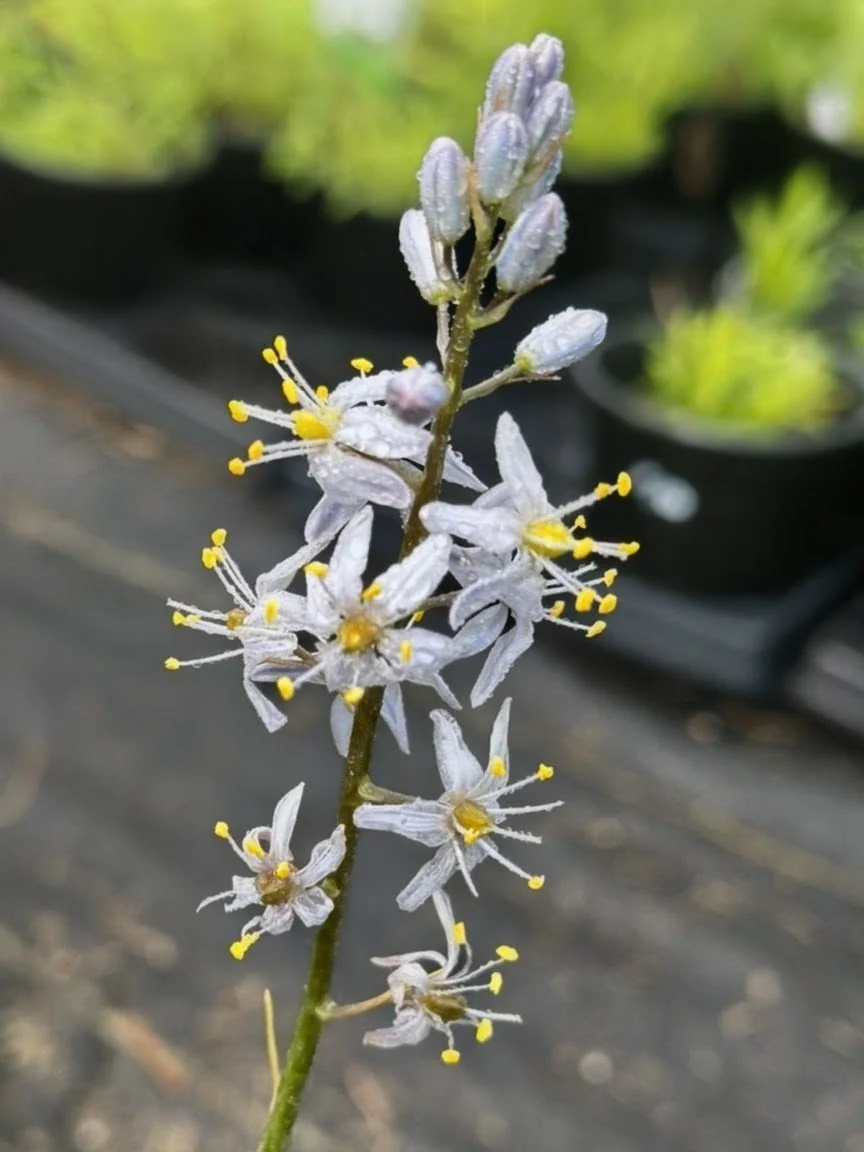
Wild Hyacinth (Camassia scilloides)

from $9.00

Indigenous people and early settlers sometimes cooked and ate the bulbs, which are starchy and nutritious—though care must be taken to avoid confusion with toxic species.

Once established, Wild Hyacinth can persist for decades, returning reliably each spring and slowly forming clumps.

While it reproduces by seed, it also spreads via bulbs, making it a great candidate for naturalizing in open woodland gardens.

When planted in groups, Wild Hyacinth creates drifts of blue flowers, rivaling ornamental bulbs for beauty in native landscapes.

Size:

Indigenous people and early settlers sometimes cooked and ate the bulbs, which are starchy and nutritious—though care must be taken to avoid confusion with toxic species.

Once established, Wild Hyacinth can persist for decades, returning reliably each spring and slowly forming clumps.

While it reproduces by seed, it also spreads via bulbs, making it a great candidate for naturalizing in open woodland gardens.

When planted in groups, Wild Hyacinth creates drifts of blue flowers, rivaling ornamental bulbs for beauty in native landscapes.

Bloom: mid- to late spring

Habitats: limestone glades; moist black soil prairies; moist open woodlands (particularly along the banks of streams); moist savannas; rocky wooded slopes

Lifespan: perennial

Moisture: moisture

Plant type (height): forb (1.5 to 2 feet)

Requirements: fun sun to light shade

Soil: rich loamy soil