Its tall white spires rise above the prairie in early summer, giving White Wild Indigo a striking, architectural presence that can be spotted from far across open fields.
The plant hosts several specialist insects, including the Wild Indigo Duskywing, whose caterpillars rely exclusively on Baptisia species for survival.
Once mature, the plant develops a deep, woody taproot, allowing it to withstand intense heat, drought, and poor soils—traits that make it one of the hardiest prairie perennials.
After flowering, the blooms give way to dark, rattling seed pods, which add late-season interest and provide food for birds and small wildlife.
Indigenous people valued the plant for both practical and medicinal purposes, using its roots and leaves in traditional remedies and its pigments as a source of natural dyes.
Unlike many prairie plants, White Wild Indigo grows slowly at first, but once established, it forms long-lived clumps that can persist for decades, anchoring restored prairies and native gardens alike.
Its tall white spires rise above the prairie in early summer, giving White Wild Indigo a striking, architectural presence that can be spotted from far across open fields.
The plant hosts several specialist insects, including the Wild Indigo Duskywing, whose caterpillars rely exclusively on Baptisia species for survival.
Once mature, the plant develops a deep, woody taproot, allowing it to withstand intense heat, drought, and poor soils—traits that make it one of the hardiest prairie perennials.
After flowering, the blooms give way to dark, rattling seed pods, which add late-season interest and provide food for birds and small wildlife.
Indigenous people valued the plant for both practical and medicinal purposes, using its roots and leaves in traditional remedies and its pigments as a source of natural dyes.
Unlike many prairie plants, White Wild Indigo grows slowly at first, but once established, it forms long-lived clumps that can persist for decades, anchoring restored prairies and native gardens alike.
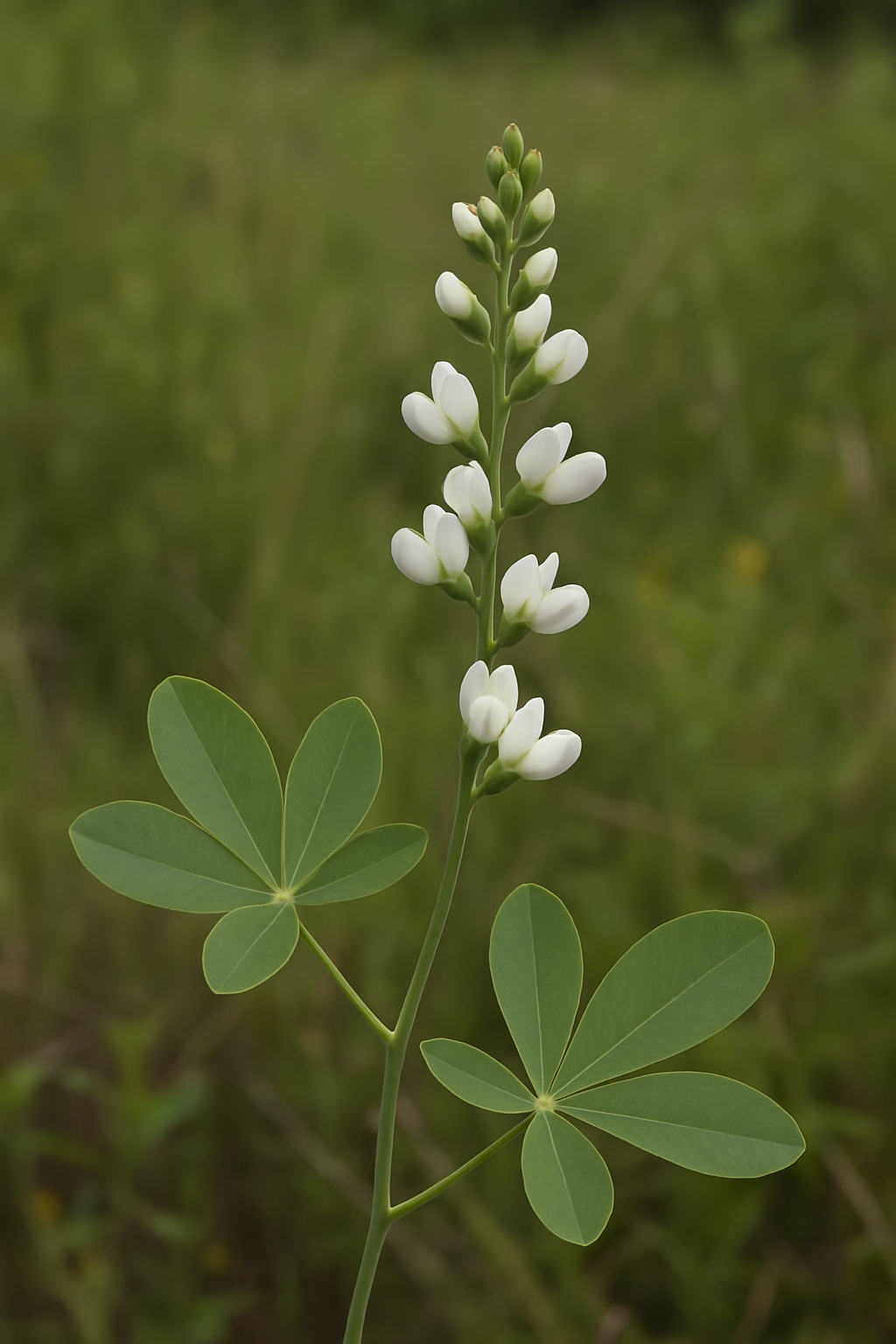 Image 1 of 1