 Image 1 of 1
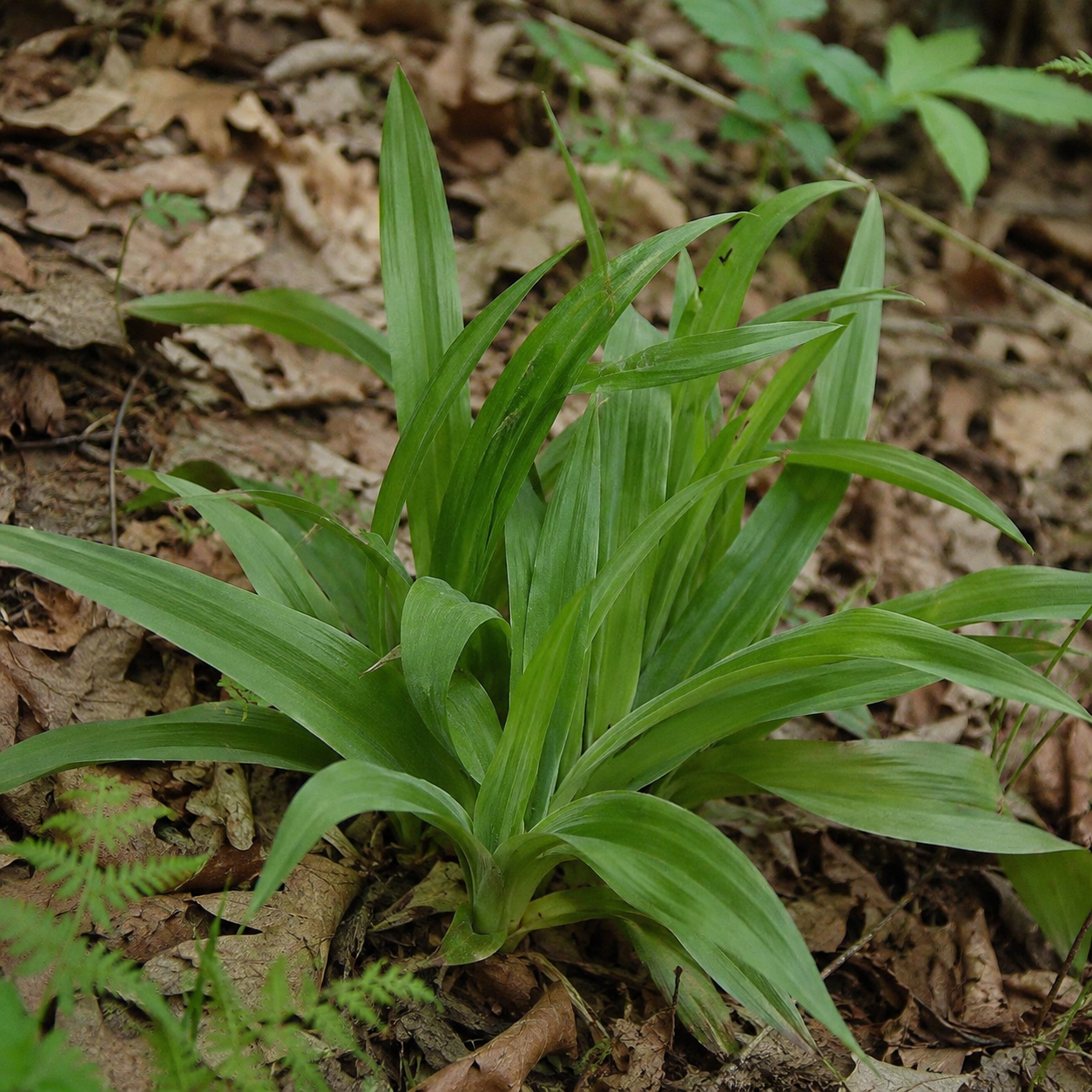
Unlike many sedges that resemble fine grasses, Broad-Leaved Woodland Sedge has lush, wide leaves that give it a woodland wildflower appearance.
It naturally grows in rich deciduous forests and thrives in dry to medium shade, making it an excellent native alternative to hostas.
Its tough, fibrous foliage is usually less appealing to deer than many woodland flowers.
Like many native sedges, it serves as a host plant for the caterpillars of several skipper butterflies and other native insects.
Its dense clumps help suppress weeds, conserve soil moisture, and stabilize woodland soils.
The leaves are often 1 inch wide or more—much broader than most native sedges in Illinois.
It handles root competition from mature trees better than many woodland perennials.
Although it looks grass-like, it's a sedge. Remember the old saying: "Sedges have edges"—their stems are typically triangular rather than round.
The foliage often develops soft yellow-green tones in autumn before going dormant.
Bloom: mid- to late spring
Habitats: bottoms of ravines; edges of bluffs; wooded slopes; upland woodlands
Lifespan: perennial
Moisture: moist to slightly dry
Plant type (height): sedge (0.75 to 1 foot)
Requirements: light to medium shade
Soil: relatively loose and contain some organic matter
Unlike many sedges that resemble fine grasses, Broad-Leaved Woodland Sedge has lush, wide leaves that give it a woodland wildflower appearance.
It naturally grows in rich deciduous forests and thrives in dry to medium shade, making it an excellent native alternative to hostas.
Its tough, fibrous foliage is usually less appealing to deer than many woodland flowers.
Like many native sedges, it serves as a host plant for the caterpillars of several skipper butterflies and other native insects.
Its dense clumps help suppress weeds, conserve soil moisture, and stabilize woodland soils.
The leaves are often 1 inch wide or more—much broader than most native sedges in Illinois.
It handles root competition from mature trees better than many woodland perennials.
Although it looks grass-like, it's a sedge. Remember the old saying: "Sedges have edges"—their stems are typically triangular rather than round.
The foliage often develops soft yellow-green tones in autumn before going dormant.
Bloom: mid- to late spring
Habitats: bottoms of ravines; edges of bluffs; wooded slopes; upland woodlands
Lifespan: perennial
Moisture: moist to slightly dry
Plant type (height): sedge (0.75 to 1 foot)
Requirements: light to medium shade
Soil: relatively loose and contain some organic matter