 Image 1 of 1
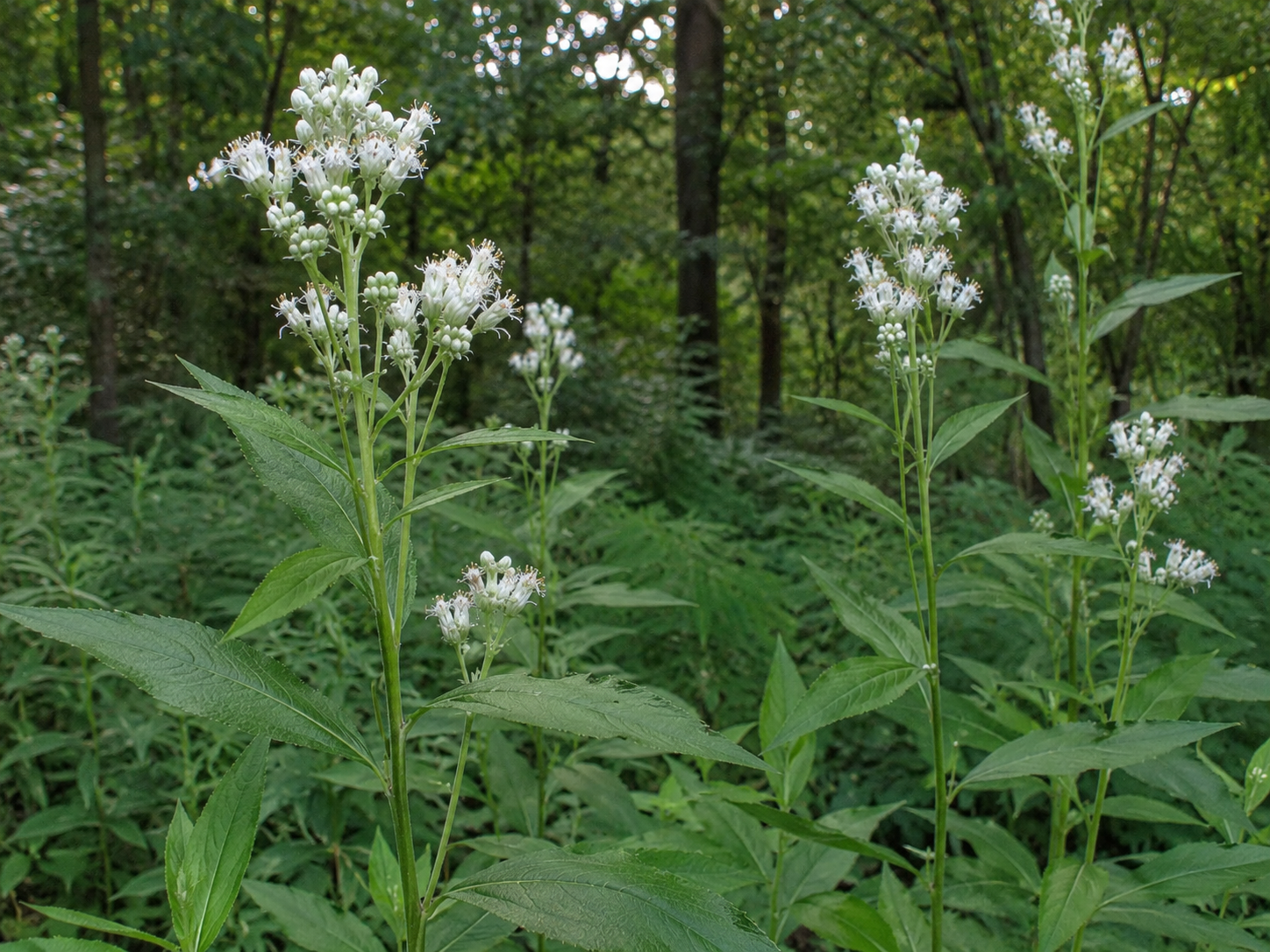
Sweet Indian Plantain is one of the tallest native woodland wildflowers in the Midwest, sometimes reaching over 7 feet tall and towering above surrounding vegetation by late summer.
Despite its tropical-sounding appearance, this plant is a member of the sunflower family, related to species like Wingstem and Cup Plant.
The leaves release a faint sweet or spicy scent when crushed, which likely contributed to the “sweet” portion of its common name.
Its fluffy white seed heads help disperse seeds by wind, giving the plant a striking appearance after flowering has finished.
Sweet Indian Plantain is especially attractive to pollinators, including native bees, small butterflies, and various flower flies during its blooming period.
Because it thrives in rich, wet woodland habitats, its presence can sometimes indicate high-quality native ecosystems with relatively undisturbed soils.
Bloom: mid-summer to early fall
Habitats: edges of marshes; moist thickets; swamps; wet woodlands
Lifespan: perennial
Moisture: wet to moist
Plant type (height): forb (3 to 7 feet)
Requirements: partial sun to light shade
Soil: mucky soil or fertile loam with high organic matter
Sweet Indian Plantain is one of the tallest native woodland wildflowers in the Midwest, sometimes reaching over 7 feet tall and towering above surrounding vegetation by late summer.
Despite its tropical-sounding appearance, this plant is a member of the sunflower family, related to species like Wingstem and Cup Plant.
The leaves release a faint sweet or spicy scent when crushed, which likely contributed to the “sweet” portion of its common name.
Its fluffy white seed heads help disperse seeds by wind, giving the plant a striking appearance after flowering has finished.
Sweet Indian Plantain is especially attractive to pollinators, including native bees, small butterflies, and various flower flies during its blooming period.
Because it thrives in rich, wet woodland habitats, its presence can sometimes indicate high-quality native ecosystems with relatively undisturbed soils.
Bloom: mid-summer to early fall
Habitats: edges of marshes; moist thickets; swamps; wet woodlands
Lifespan: perennial
Moisture: wet to moist
Plant type (height): forb (3 to 7 feet)
Requirements: partial sun to light shade
Soil: mucky soil or fertile loam with high organic matter