 Image 1 of 1
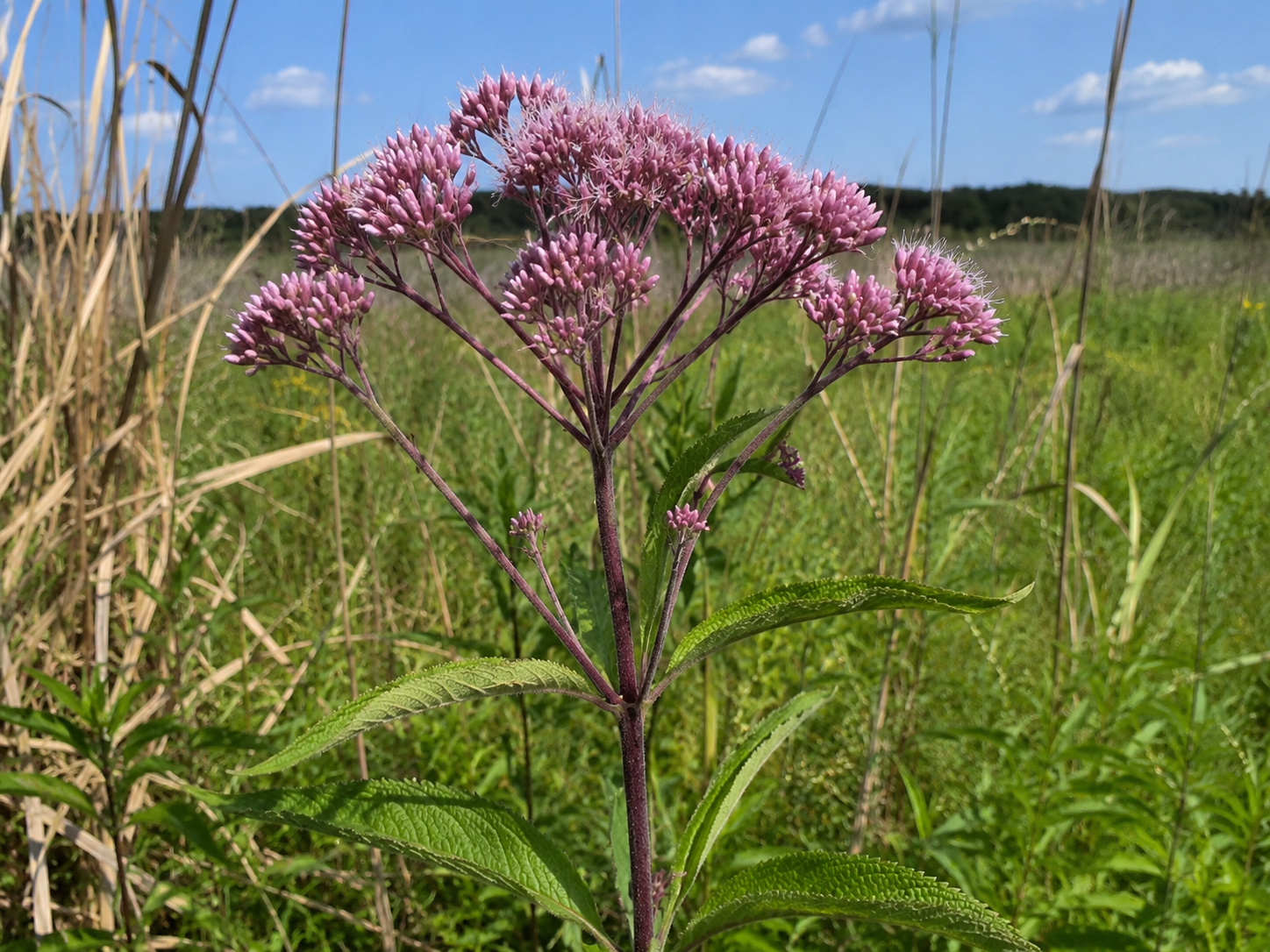
True to its name, Spotted Joe-Pye Weed features tall stems marked with distinctive purple spots, often reaching 3 to 5 feet tall and creating a dramatic presence in the garden.
Its large clusters of dusty pink to mauve flowers are a magnet for butterflies, bees, and other pollinators, providing an important late-summer nectar source.
Naturally found in moist meadows, prairies, and wetland edges, it helps support biodiversity while adding height and texture to native plantings.
According to folklore, the plant is named after Joe Pye, an Indigenous healer who was said to have used related species in traditional medicinal practices, helping cement its place in North American botanical history.
Bloom: mid- to late summer
Habitats: fens; sedge meadows; swampy thickets with small trees or shrubs; wet black soil prairies; wet sand prairies
Lifespan: perennial
Moisture: wet to moist
Plant type (height): forb (3 to 5 feet)
Requirements: full sun to partial sun
Soil: mineral-rich soil containing sandy loam or silt
True to its name, Spotted Joe-Pye Weed features tall stems marked with distinctive purple spots, often reaching 3 to 5 feet tall and creating a dramatic presence in the garden.
Its large clusters of dusty pink to mauve flowers are a magnet for butterflies, bees, and other pollinators, providing an important late-summer nectar source.
Naturally found in moist meadows, prairies, and wetland edges, it helps support biodiversity while adding height and texture to native plantings.
According to folklore, the plant is named after Joe Pye, an Indigenous healer who was said to have used related species in traditional medicinal practices, helping cement its place in North American botanical history.
Bloom: mid- to late summer
Habitats: fens; sedge meadows; swampy thickets with small trees or shrubs; wet black soil prairies; wet sand prairies
Lifespan: perennial
Moisture: wet to moist
Plant type (height): forb (3 to 5 feet)
Requirements: full sun to partial sun
Soil: mineral-rich soil containing sandy loam or silt