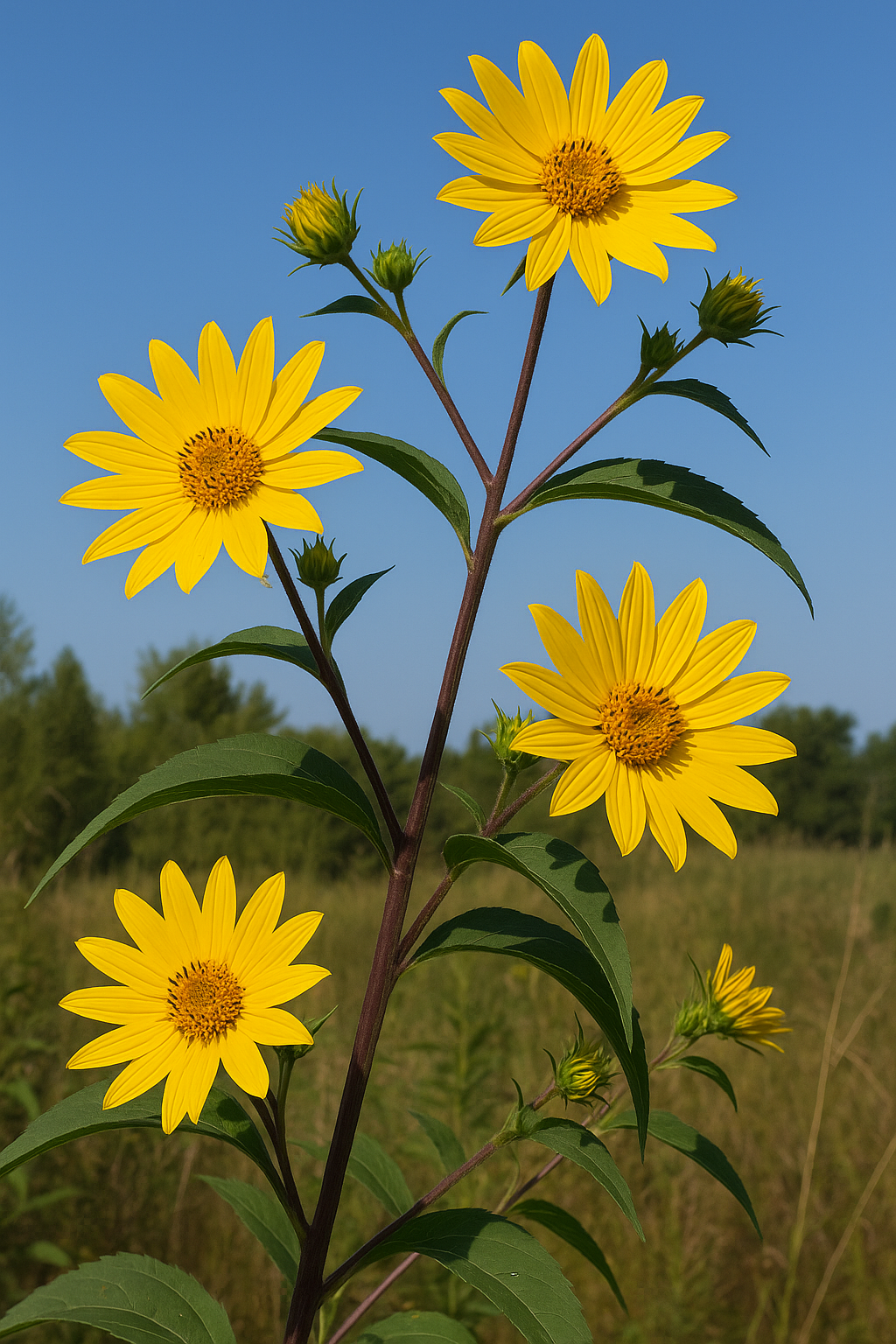
Sawtooth Sunflower (Helianthus grosseserratus)

from $5.00
sold out

Its towering height and bright golden blooms make the Sawtooth Sunflower one of the most striking late-summer giants of the prairie, often reaching well over eight feet tall.

The plant gets its name from its sharply serrated, lance-shaped foliage—saw-toothed leaves that give it an unmistakable texture as you brush past in open fields.

Its sturdy reddish-purple stems support numerous flower heads, creating a beacon for bees, butterflies, and beetles that swarm the blooms for pollen and nectar.

Unlike many sunflowers, this species spreads through underground rhizomes, forming large, expanding colonies that can dominate a sunny meadow over time.

Indigenous groups historically used parts of the plant in traditional medicinal practices, though it is now valued primarily for its ecological importance.

By late season, Sawtooth Sunflower becomes a key food source for wildlife—its seeds feeding songbirds, while its tall structure offers shelter for insects and small animals.

Size:

Its towering height and bright golden blooms make the Sawtooth Sunflower one of the most striking late-summer giants of the prairie, often reaching well over eight feet tall.

The plant gets its name from its sharply serrated, lance-shaped foliage—saw-toothed leaves that give it an unmistakable texture as you brush past in open fields.

Its sturdy reddish-purple stems support numerous flower heads, creating a beacon for bees, butterflies, and beetles that swarm the blooms for pollen and nectar.

Unlike many sunflowers, this species spreads through underground rhizomes, forming large, expanding colonies that can dominate a sunny meadow over time.

Indigenous groups historically used parts of the plant in traditional medicinal practices, though it is now valued primarily for its ecological importance.

By late season, Sawtooth Sunflower becomes a key food source for wildlife—its seeds feeding songbirds, while its tall structure offers shelter for insects and small animals.

Bloom: late summer to fall

Habitats: areas along ditches, railroads, and roadsides; bases of bluffs; Bur Oak savannas; fence rows; moist meadows near lakes or rivers; moist to mesic black soil prairies; thickets

Lifespan: perennial

Moisture: moist

Plant type (height): forb (3 to 12 feet)

Requirements: full sun

Soil: fertile loamy soil with high organic content