 Image 1 of 1
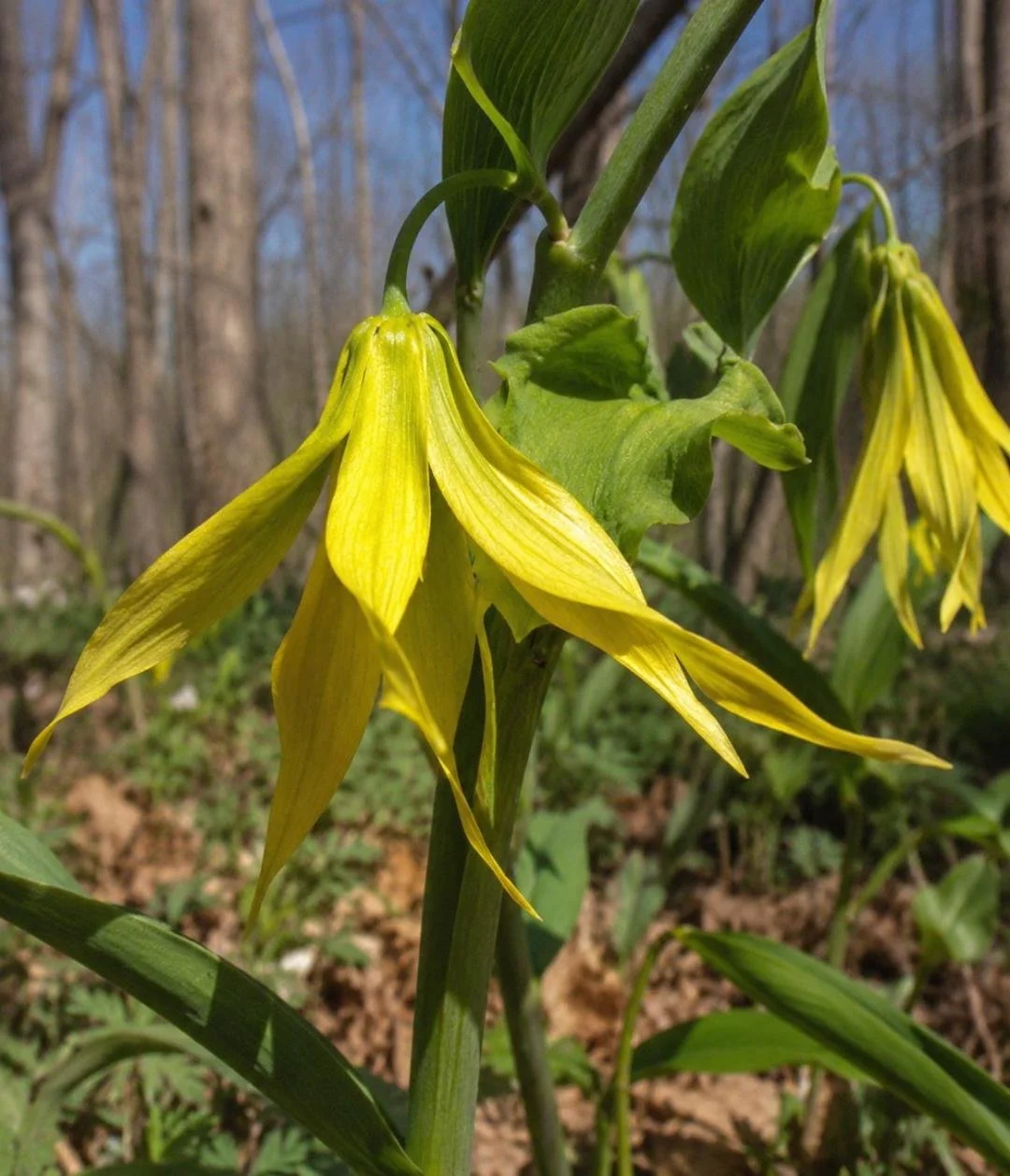
Large-Flowered Bellwort (Uvularia grandiflora) gets its name from its nodding, bell-shaped yellow flowers that dangle beneath the stems like little woodland lanterns in spring.
One of the earliest blooming woodland wildflowers in the Midwest, it provides an important nectar source for emerging native bees and other early pollinators.
The stems appear to pierce directly through the leaves, giving the plant a unique “woven through the foliage” appearance that helps distinguish it from many other spring ephemerals.
Despite its delicate appearance, this native woodland perennial can slowly form graceful colonies over time in rich, shaded forests.
The flowers are especially attractive to bumblebees, which often crawl partially inside the blooms while pollinating them.
Historically, some indigenous groups reportedly used parts of bellwort medicinally for minor ailments, though it was never a major herbal plant.
Deer may browse the foliage occasionally, but established plants are surprisingly resilient in healthy woodland settings.
Bloom: mid to late spring
Habitats: deciduous woodlands; edges of shady seeps; large wooded river banks; mesic deciduous woodlands; wooded slopes
Lifespan: perennial
Moisture: moist to slightly dry
Plant type (height): forb (1 to 2 feet)
Requirements: dappled sunlight to light shade
Soil: fertile loam with abundant organic matter
Large-Flowered Bellwort (Uvularia grandiflora) gets its name from its nodding, bell-shaped yellow flowers that dangle beneath the stems like little woodland lanterns in spring.
One of the earliest blooming woodland wildflowers in the Midwest, it provides an important nectar source for emerging native bees and other early pollinators.
The stems appear to pierce directly through the leaves, giving the plant a unique “woven through the foliage” appearance that helps distinguish it from many other spring ephemerals.
Despite its delicate appearance, this native woodland perennial can slowly form graceful colonies over time in rich, shaded forests.
The flowers are especially attractive to bumblebees, which often crawl partially inside the blooms while pollinating them.
Historically, some indigenous groups reportedly used parts of bellwort medicinally for minor ailments, though it was never a major herbal plant.
Deer may browse the foliage occasionally, but established plants are surprisingly resilient in healthy woodland settings.
Bloom: mid to late spring
Habitats: deciduous woodlands; edges of shady seeps; large wooded river banks; mesic deciduous woodlands; wooded slopes
Lifespan: perennial
Moisture: moist to slightly dry
Plant type (height): forb (1 to 2 feet)
Requirements: dappled sunlight to light shade
Soil: fertile loam with abundant organic matter