Despite its delicate appearance, Grass-Leaved Goldenrod is one of the toughest late-season bloomers on the prairie, thriving in everything from dry fields to roadside ditches.
Its narrow, grass-like leaves give the plant a distinctive texture, allowing it to blend seamlessly into tall grasses until its bright yellow flower clusters burst into view.
Each plant produces dozens of tiny star-shaped blossoms, creating a soft golden haze that becomes a beacon for bees, butterflies, and beneficial wasps during the late summer nectar shortage.
Unlike ragweed, this goldenrod is non-allergenic—its heavy pollen relies on insects, not wind, making it a safe and beautiful choice for pollinator gardens.
Spreading by rhizomes, it can form expansive colonies in open habitats, often stabilizing disturbed soils and reclaiming forgotten patches of land.
Historically, goldenrods—including this species—were used in traditional herbal remedies, especially for inflammation and digestive health, though Grass-Leaved Goldenrod is valued today mainly for its ecological importance.
Despite its delicate appearance, Grass-Leaved Goldenrod is one of the toughest late-season bloomers on the prairie, thriving in everything from dry fields to roadside ditches.
Its narrow, grass-like leaves give the plant a distinctive texture, allowing it to blend seamlessly into tall grasses until its bright yellow flower clusters burst into view.
Each plant produces dozens of tiny star-shaped blossoms, creating a soft golden haze that becomes a beacon for bees, butterflies, and beneficial wasps during the late summer nectar shortage.
Unlike ragweed, this goldenrod is non-allergenic—its heavy pollen relies on insects, not wind, making it a safe and beautiful choice for pollinator gardens.
Spreading by rhizomes, it can form expansive colonies in open habitats, often stabilizing disturbed soils and reclaiming forgotten patches of land.
Historically, goldenrods—including this species—were used in traditional herbal remedies, especially for inflammation and digestive health, though Grass-Leaved Goldenrod is valued today mainly for its ecological importance.
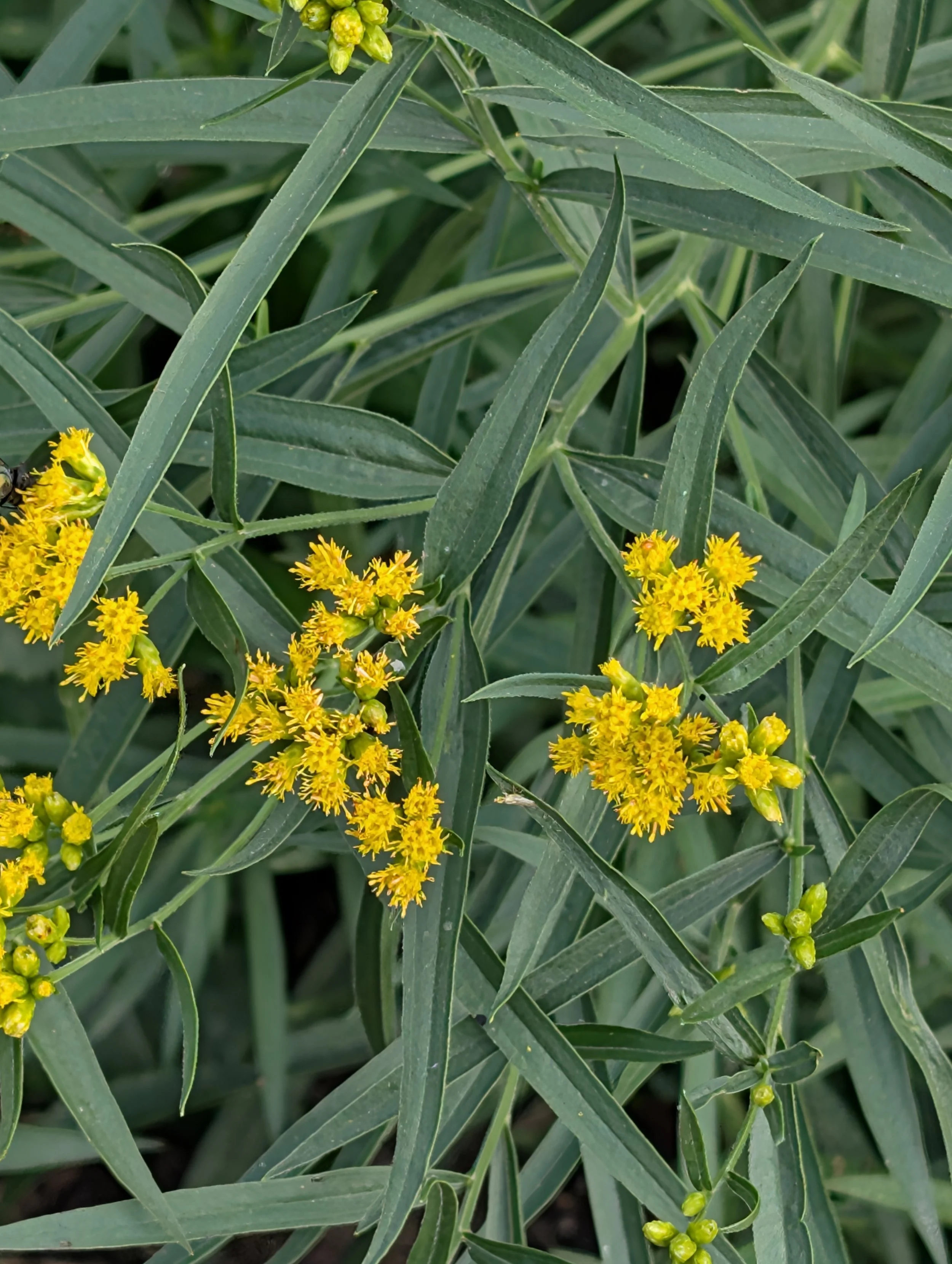 Image 1 of 1