In early summer, Goat’s Beard erupts with massive, feathery plumes of creamy white flowers that can tower above the rest of the shade garden, giving it an almost wedding-veil elegance in the forest understory.
Its blooms are so light and airy that they shimmer in the breeze, attracting a steady stream of native bees, beetles, and small pollinators that flock to the thousands of tiny blossoms.
This species is dioecious, meaning plants are either male or female—male plants produce fuller, showier flower plumes, while female plants create delicate, more slender sprays.
Despite its refined appearance, Goat’s Beard is extremely hardy and long-lived, forming dense clumps that can persist for decades along woodland edges, streamsides, and moist slopes.
Indigenous peoples used parts of the plant for traditional medicinal purposes, relying on its astringent roots for various remedies, though it is not widely used in modern herbalism.
Once established, it can reach impressive size, becoming a structural anchor in shade gardens and natural plantings while also providing valuable cover for wildlife.
In early summer, Goat’s Beard erupts with massive, feathery plumes of creamy white flowers that can tower above the rest of the shade garden, giving it an almost wedding-veil elegance in the forest understory.
Its blooms are so light and airy that they shimmer in the breeze, attracting a steady stream of native bees, beetles, and small pollinators that flock to the thousands of tiny blossoms.
This species is dioecious, meaning plants are either male or female—male plants produce fuller, showier flower plumes, while female plants create delicate, more slender sprays.
Despite its refined appearance, Goat’s Beard is extremely hardy and long-lived, forming dense clumps that can persist for decades along woodland edges, streamsides, and moist slopes.
Indigenous peoples used parts of the plant for traditional medicinal purposes, relying on its astringent roots for various remedies, though it is not widely used in modern herbalism.
Once established, it can reach impressive size, becoming a structural anchor in shade gardens and natural plantings while also providing valuable cover for wildlife.
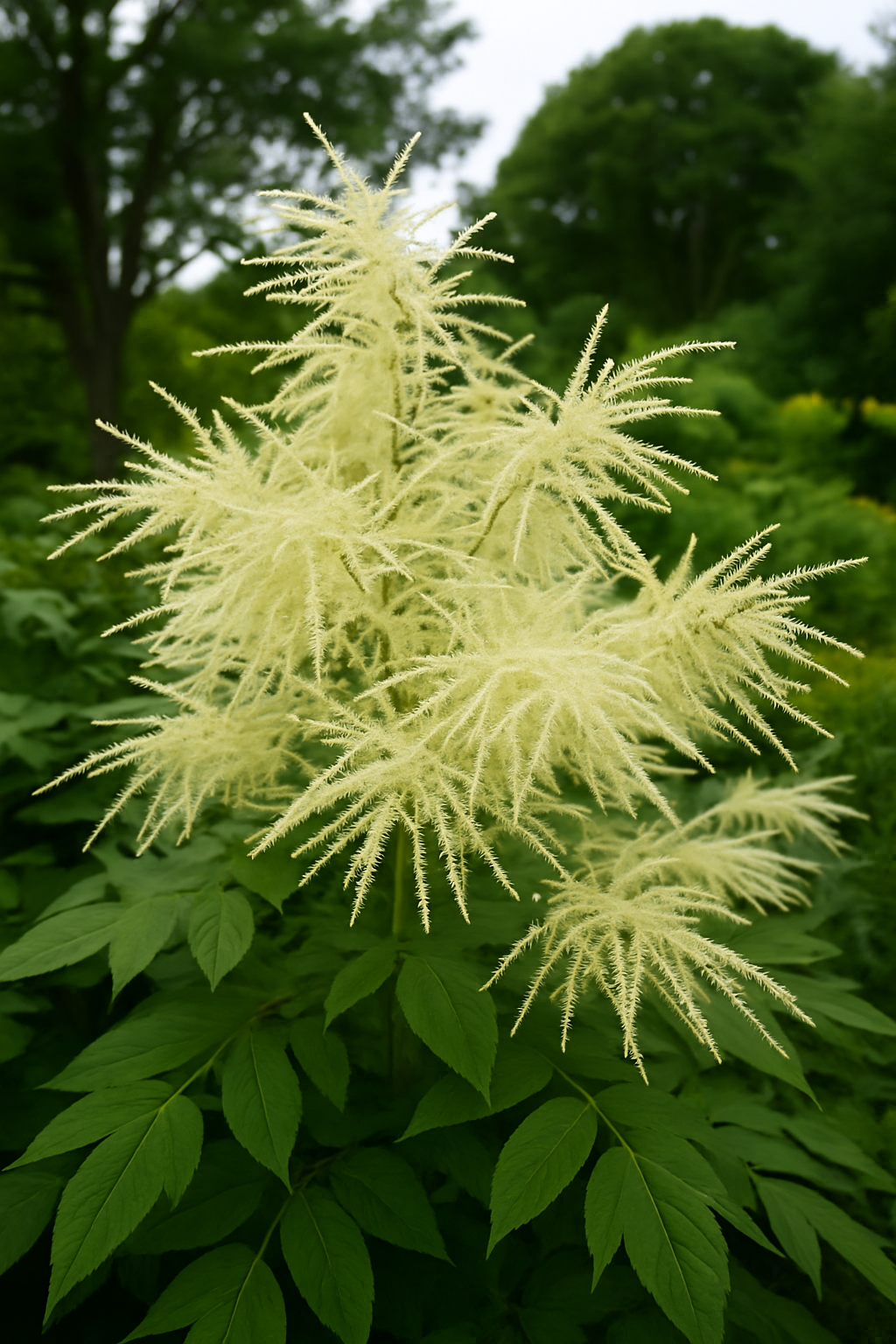 Image 1 of 1