 Image 1 of 1
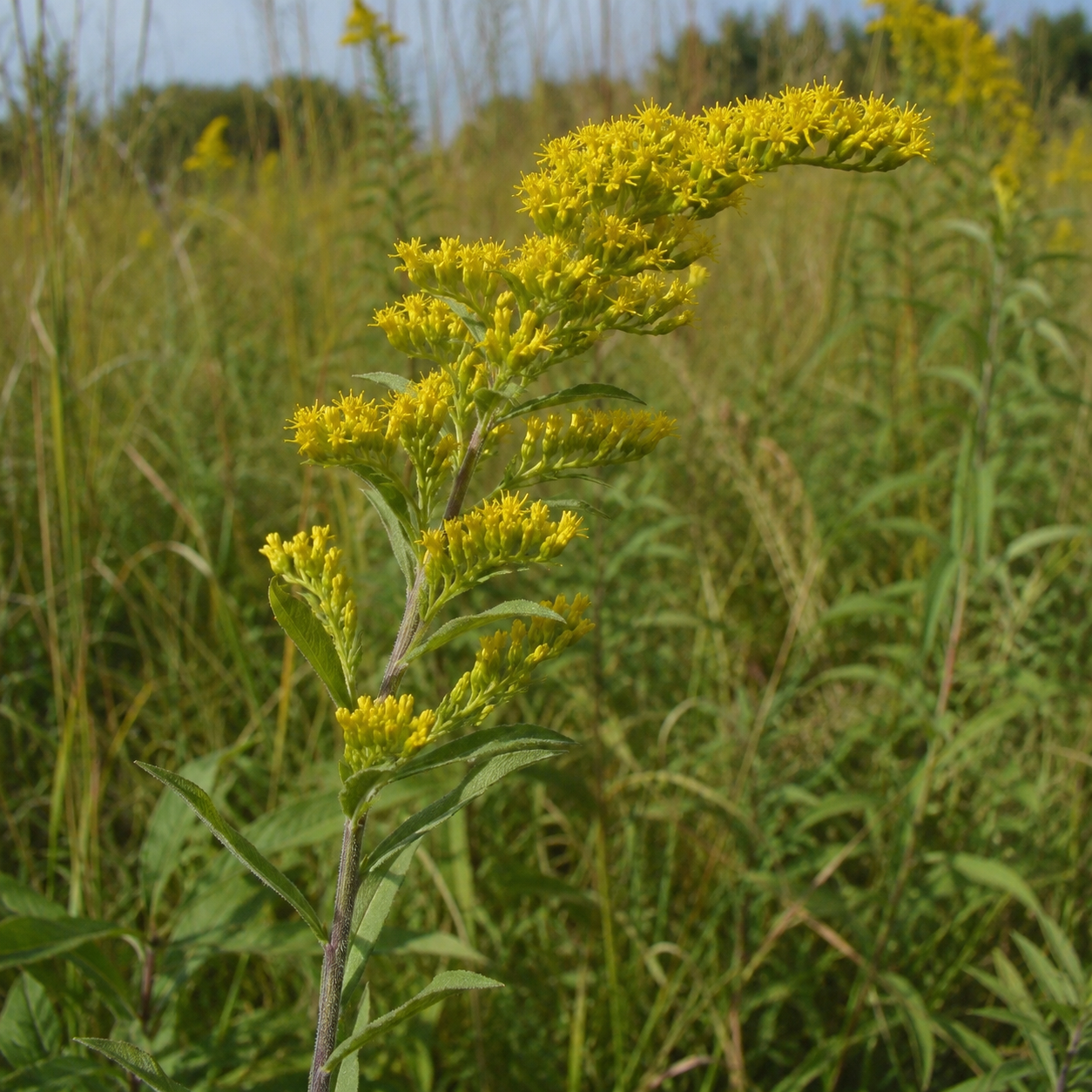
Field Goldenrod blooms in fall, providing critical food for migrating monarchs and other pollinators
Its bright yellow flowers attract dozens of native bees, butterflies, wasps, beetles, and flies.
Unlike many prairie plants, it does well in dry, sandy, rocky, and nutrient-poor soils.
Field Goldenrod is often among the first native plants to colonize disturbed ground, helping stabilize soil and support ecological recovery.
Goldenrods are among the most ecologically valuable native plants in North America, hosting over 100 species of caterpillars and numerous beneficial insects.
Goldenrod pollen is heavy and insect-pollinated, so it rarely causes hay fever. The real culprit is often Ragweed, which blooms at the same time.
It's shorter and tidier than many other goldenrod species, making it a great garden plant.
Its drought tolerance and long bloom period make it a dependable choice for low-maintenance native landscapes.
When many flowers are fading, Field Goldenrod lights up prairies and roadsides with bright golden-yellow blooms.
Bloom: fall
Habitats: abandoned fields; areas along railroads; eroded clay banks; fence rows; gravel prairies; hill prairies; roadsides; sand prairies; sandy savannas; thinly wooded bluffs; upland areas of black soil prairies
Lifespan: perennial
Moisture: dry-mesic to dry
Plant type (height): forb (0.5 to 2.5 feet)
Requirements: full sun
Soil: clay; fertile; gravel; sand
Field Goldenrod blooms in fall, providing critical food for migrating monarchs and other pollinators
Its bright yellow flowers attract dozens of native bees, butterflies, wasps, beetles, and flies.
Unlike many prairie plants, it does well in dry, sandy, rocky, and nutrient-poor soils.
Field Goldenrod is often among the first native plants to colonize disturbed ground, helping stabilize soil and support ecological recovery.
Goldenrods are among the most ecologically valuable native plants in North America, hosting over 100 species of caterpillars and numerous beneficial insects.
Goldenrod pollen is heavy and insect-pollinated, so it rarely causes hay fever. The real culprit is often Ragweed, which blooms at the same time.
It's shorter and tidier than many other goldenrod species, making it a great garden plant.
Its drought tolerance and long bloom period make it a dependable choice for low-maintenance native landscapes.
When many flowers are fading, Field Goldenrod lights up prairies and roadsides with bright golden-yellow blooms.
Bloom: fall
Habitats: abandoned fields; areas along railroads; eroded clay banks; fence rows; gravel prairies; hill prairies; roadsides; sand prairies; sandy savannas; thinly wooded bluffs; upland areas of black soil prairies
Lifespan: perennial
Moisture: dry-mesic to dry
Plant type (height): forb (0.5 to 2.5 feet)
Requirements: full sun
Soil: clay; fertile; gravel; sand