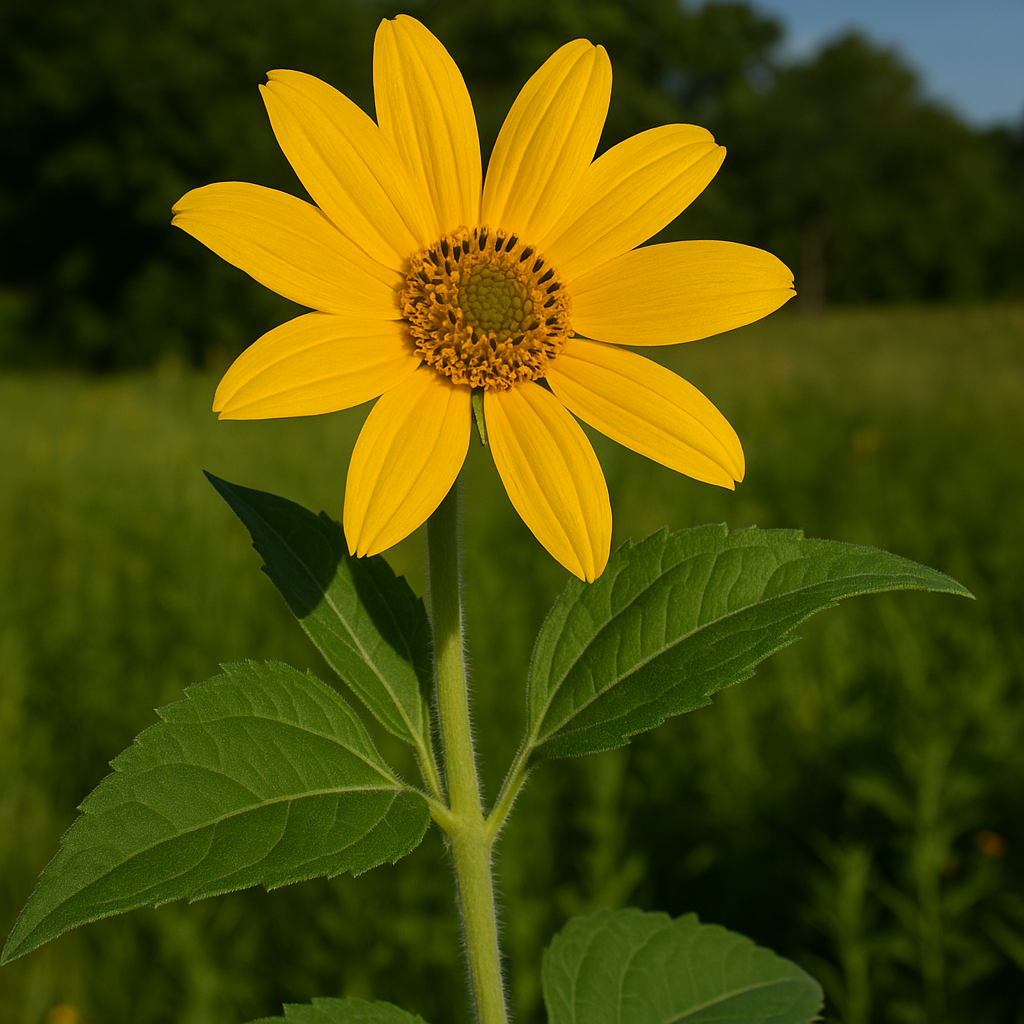
False Sunflower (Heliopsis helianthoides)

from $5.00
sold out

Despite its name, the False Sunflower isn’t pretending—its golden blooms shine from early to late summer, offering one of the longest flowering seasons of any native prairie plant.

Its bright yellow rays act like pollinator magnets, attracting bees, butterflies, and beneficial insects from far across the meadow.

Unlike true sunflowers, this species forms sturdy, upright clumps that don’t flop, making it a dependable anchor in naturalized plantings and native gardens.

Its rough, sandpapery leaves are a signature trait, helping the plant withstand heat, drought, and challenging soil conditions with ease.

Though not commonly used in modern herbalism, Indigenous groups historically recognized its potential and used the plant in traditional medicinal practices.

With time, False Sunflower can create expanding colonies, offering long-term structure, habitat, and vibrant color year after year.

Size:

Despite its name, the False Sunflower isn’t pretending—its golden blooms shine from early to late summer, offering one of the longest flowering seasons of any native prairie plant.

Its bright yellow rays act like pollinator magnets, attracting bees, butterflies, and beneficial insects from far across the meadow.

Unlike true sunflowers, this species forms sturdy, upright clumps that don’t flop, making it a dependable anchor in naturalized plantings and native gardens.

Its rough, sandpapery leaves are a signature trait, helping the plant withstand heat, drought, and challenging soil conditions with ease.

Though not commonly used in modern herbalism, Indigenous groups historically recognized its potential and used the plant in traditional medicinal practices.

With time, False Sunflower can create expanding colonies, offering long-term structure, habitat, and vibrant color year after year.

Bloom: early to late summer

Habitats: areas along railroads where prairie remnants occur; banks of streams; black soil prairies; grassy meadows in wooded areas; limestone glades; open woodlands; river-bottom prairies; savannas; thickets

Lifespan: perennial

Moisture: moist to mesic

Plant type (height): forb (3 to 5 feet)

Requirements: full sun to partial sun

Soil: loamy soil (clay-loam and rocky ground are tolerated)