Culver's Root (Veronicastrum virginicum)

from $5.00
sold out

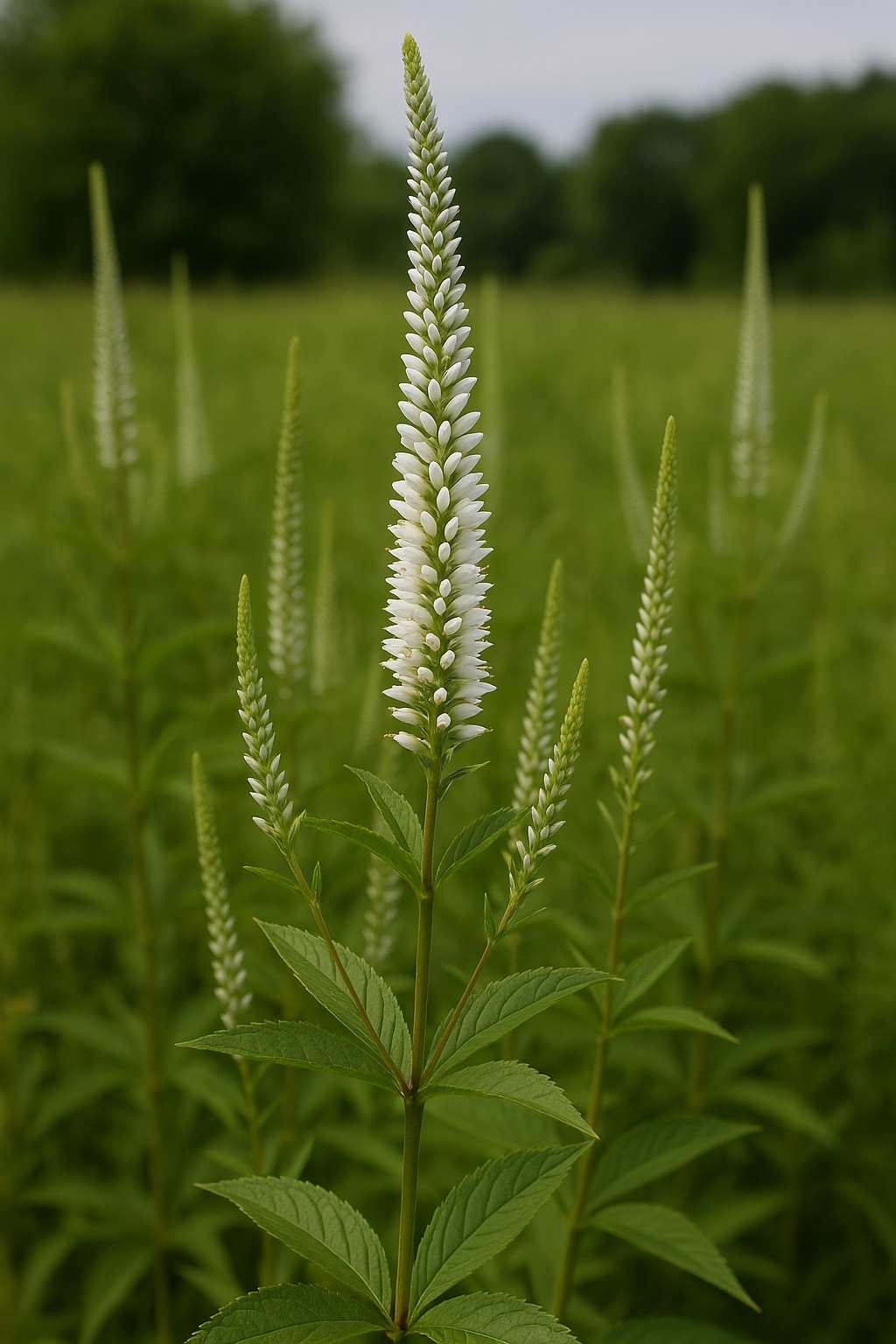
Its elegant white flower spikes can reach over five feet tall, giving Culver’s Root a commanding, candle-like presence in meadows and moist prairies.

Each spike is made of hundreds of tiny tubular blooms that act as pollinator highways, drawing bees, butterflies, and hoverflies that travel up and down the columns in constant motion.

One of its most distinctive traits is its whorled leaves, arranged in perfect tiers around the stem—an architectural pattern that makes the plant stand out even before it blooms.

Indigenous peoples traditionally used the root as a potent medicinal purge, giving rise to the name “Culver’s Root,” though the plant is rarely used this way today due to its strong laxative properties.

Once established, this perennial forms long-lived colonies that return reliably year after year, providing structure and height in naturalized plantings and restored prairies.

Its deep root system helps stabilize soil and endure drought, making Culver’s Root a resilient, low-maintenance choice for wetland edges, prairie gardens, and wildlife plantings.

Size:

Its elegant white flower spikes can reach over five feet tall, giving Culver’s Root a commanding, candle-like presence in meadows and moist prairies.

Each spike is made of hundreds of tiny tubular blooms that act as pollinator highways, drawing bees, butterflies, and hoverflies that travel up and down the columns in constant motion.

One of its most distinctive traits is its whorled leaves, arranged in perfect tiers around the stem—an architectural pattern that makes the plant stand out even before it blooms.

Indigenous peoples traditionally used the root as a potent medicinal purge, giving rise to the name “Culver’s Root,” though the plant is rarely used this way today due to its strong laxative properties.

Once established, this perennial forms long-lived colonies that return reliably year after year, providing structure and height in naturalized plantings and restored prairies.

Its deep root system helps stabilize soil and endure drought, making Culver’s Root a resilient, low-maintenance choice for wetland edges, prairie gardens, and wildlife plantings.

Bloom: early to mid-summer

Habitats: moist to mesic black soil prairies; openings and edges of woodlands; sand prairies; savannas; swampy meadows along ditches and rivers; thickets

Lifespan: perennial

Moisture: moist to mesic

Plant type (height): forb (up to 5 feet)

Requirements: full sun to partial sun

Soil: rich loamy soil (some clay or sand is tolerated)