 Image 1 of 1
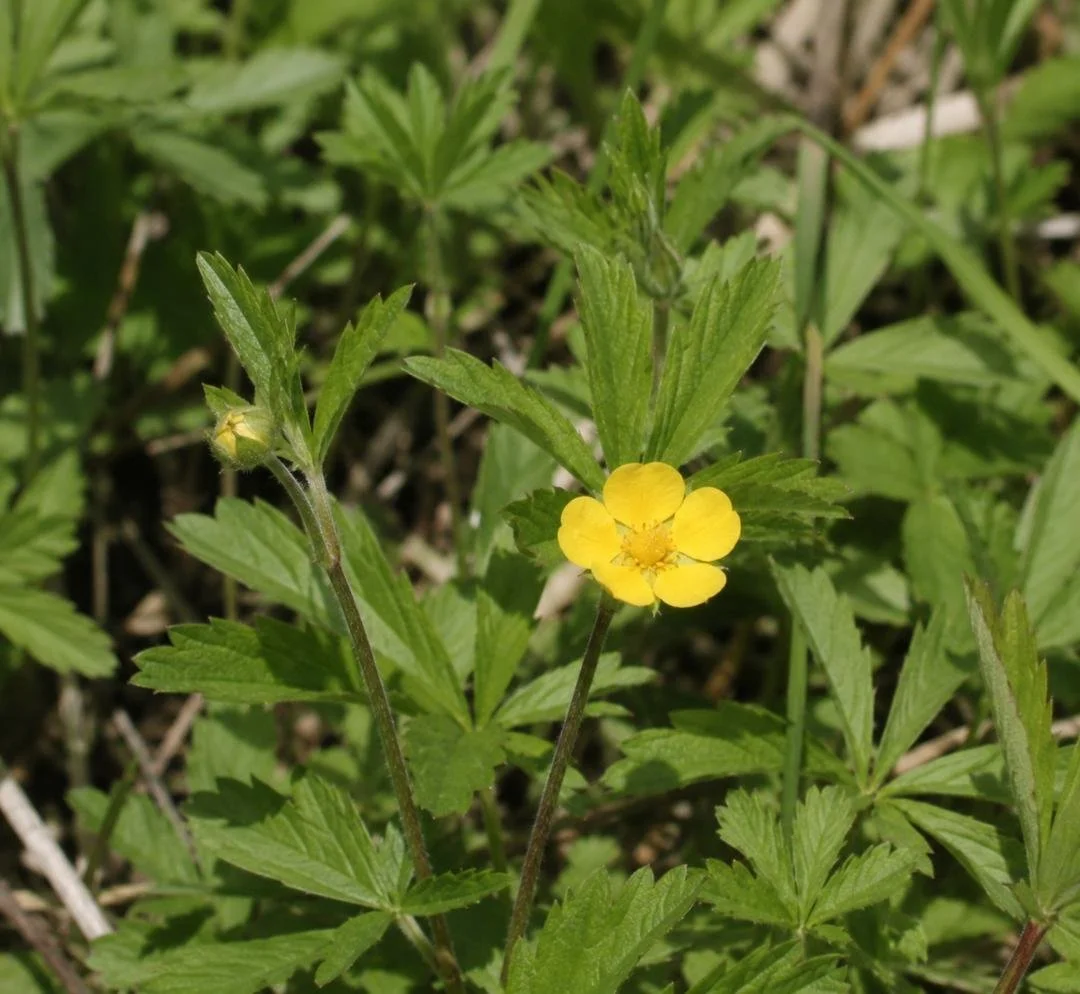
Common Cinquefoil (Potentilla simplex) gets its name from its five-parted leaves and cheerful yellow flowers, with “cinquefoil” originating from old French words meaning “five leaves.”
This low-growing native spreads by runners called stolons, allowing it to gradually form dense mats that can help stabilize soil and suppress weeds in sunny natural areas.
Its leaves resemble miniature strawberry leaves, which makes sense since both plants belong to the rose family (Rosaceae).
The bright yellow flowers attract a variety of small native bees, flies, and other pollinating insects throughout late spring and early summer.
Common Cinquefoil is remarkably tough and thrives in dry, rocky, sandy, or nutrient-poor soils where many other plants struggle to establish.
Because of its low growth habit, it can work well as a native groundcover in prairie gardens, pathways, and sunny open woodland edges.
Historically, various Potentilla species were used in traditional herbal practices due to their high tannin content, particularly for astringent properties.
Despite its delicate appearance, this plant is highly resilient and tolerant of drought once established.
Bloom: late spring to mid-summer
Habitats: black soil prairies; clay prairies; gravel prairies; hill prairies; openings in upland forests; pastures; rocky upland woodlands; sandy savannas; sandy upland forests; savannas
Lifespan: perennial
Moisture: mesic to dry
Plant type (height): forb (under 1 foot tall)
Requirements: full sun to partial sun
Soil: rocky soil; sandy soil; well-drained soil
Common Cinquefoil (Potentilla simplex) gets its name from its five-parted leaves and cheerful yellow flowers, with “cinquefoil” originating from old French words meaning “five leaves.”
This low-growing native spreads by runners called stolons, allowing it to gradually form dense mats that can help stabilize soil and suppress weeds in sunny natural areas.
Its leaves resemble miniature strawberry leaves, which makes sense since both plants belong to the rose family (Rosaceae).
The bright yellow flowers attract a variety of small native bees, flies, and other pollinating insects throughout late spring and early summer.
Common Cinquefoil is remarkably tough and thrives in dry, rocky, sandy, or nutrient-poor soils where many other plants struggle to establish.
Because of its low growth habit, it can work well as a native groundcover in prairie gardens, pathways, and sunny open woodland edges.
Historically, various Potentilla species were used in traditional herbal practices due to their high tannin content, particularly for astringent properties.
Despite its delicate appearance, this plant is highly resilient and tolerant of drought once established.
Bloom: late spring to mid-summer
Habitats: black soil prairies; clay prairies; gravel prairies; hill prairies; openings in upland forests; pastures; rocky upland woodlands; sandy savannas; sandy upland forests; savannas
Lifespan: perennial
Moisture: mesic to dry
Plant type (height): forb (under 1 foot tall)
Requirements: full sun to partial sun
Soil: rocky soil; sandy soil; well-drained soil