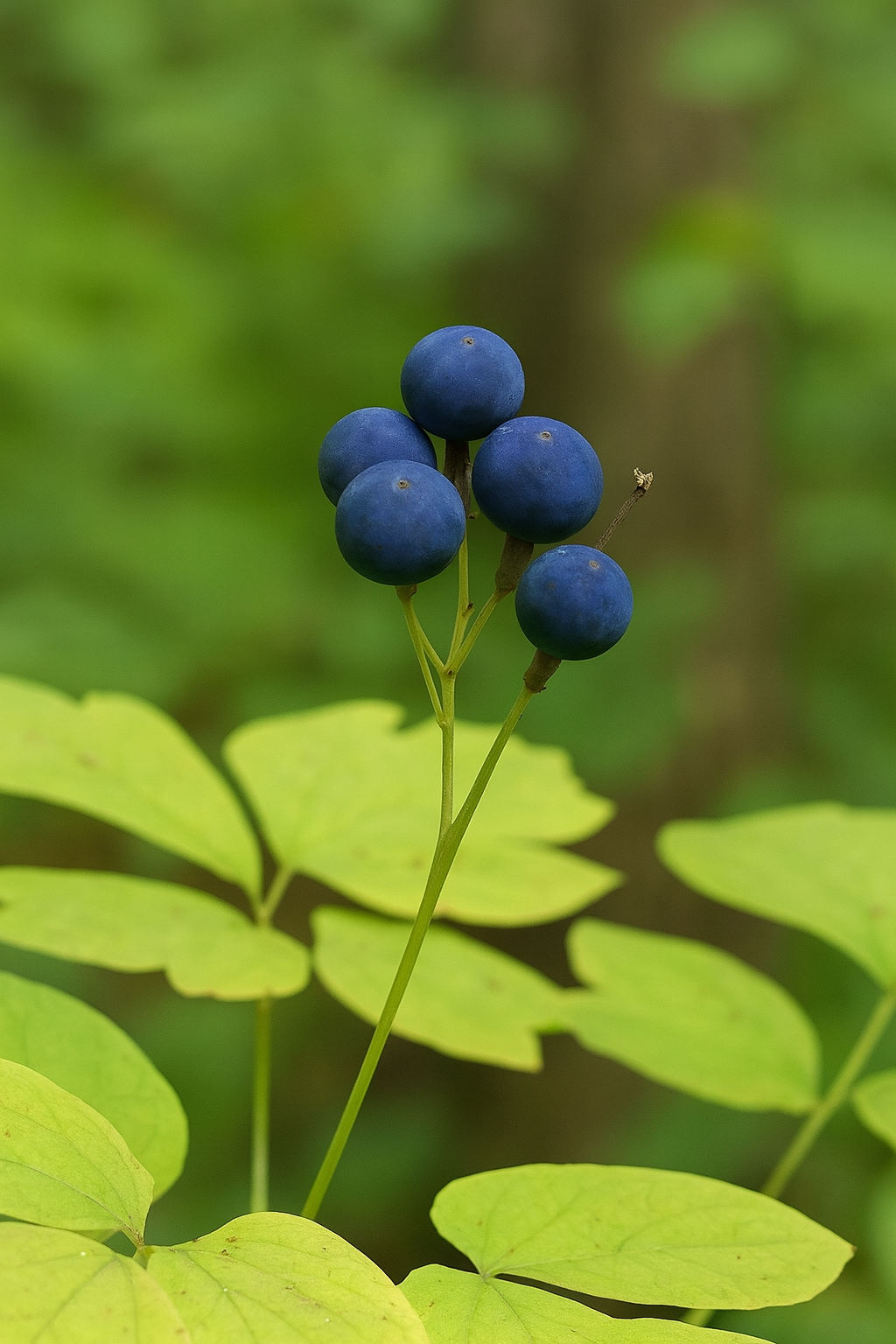
Blue Cohosh (Caulophyllum thalictroides)

from $9.00
sold out

In late summer and fall, Blue Cohosh produces clusters of deep, metallic blue berries that stand out vividly against the woodland understory—an eye-catching display that belies their toxicity.

Though beautiful, these berries are highly poisonous to humans and many animals, yet certain birds can safely consume them and help disperse the seeds throughout the forest.

The plant’s early spring emergence is just as striking: its young foliage appears with a bluish-purple haze, gradually shifting to green as the canopy fills in.

Traditionally, Indigenous peoples used the root for significant medicinal purposes, particularly in women’s health, though the plant’s potent chemistry means it must be treated with great caution.

Blue Cohosh thrives in rich, shaded forests, forming long-lived clumps that return reliably each year, even in deep leaf litter and low-light conditions.

Despite its delicate appearance, this species is surprisingly resilient—its thick, knobby rhizomes allow it to endure harsh winters and remain a sturdy woodland perennial for decades.

Size:

In late summer and fall, Blue Cohosh produces clusters of deep, metallic blue berries that stand out vividly against the woodland understory—an eye-catching display that belies their toxicity.

Though beautiful, these berries are highly poisonous to humans and many animals, yet certain birds can safely consume them and help disperse the seeds throughout the forest.

The plant’s early spring emergence is just as striking: its young foliage appears with a bluish-purple haze, gradually shifting to green as the canopy fills in.

Traditionally, Indigenous peoples used the root for significant medicinal purposes, particularly in women’s health, though the plant’s potent chemistry means it must be treated with great caution.

Blue Cohosh thrives in rich, shaded forests, forming long-lived clumps that return reliably each year, even in deep leaf litter and low-light conditions.

Despite its delicate appearance, this species is surprisingly resilient—its thick, knobby rhizomes allow it to endure harsh winters and remain a sturdy woodland perennial for decades.

Bloom: mid- to late spring

Habitats: bluffs; rich mesic woodlands; wooded slopes of large ravines

Lifespan: perennial

Moisture: mesic

Plant type (height): forb (1 to 3 feet)

Requirements: dappled sunlight during the spring, followed by light shade during the summer

Soil: fertile loamy soil